|
Costa Cruises
Costa’s European cruises mainly draw the Italian cruising enthusiasts, but the traveler list also includes Americans, Asians, French, Germans, British, and others. Americans represent only about 20% of the clientele on any given sailing, but that’s part of the fun: meeting new people and trying out a few remembered words from high school language classes. Costa Cruises does an excellent job catering to its diverse clientele, but announcements are delivered in five languages on the loudspeakers and at entertainment and activities gatherings, which can get a bit tiring. In the past, smoking has also been a problem—Europeans smoke more than Americans these days—but in 2002, the line banned smoking at least in the main dining room and main showroom on European cruises. The onboard currency is the euro when the ships travel European waters. During the winter Caribbean and South American season, the currency is the American dollar. Pros • Italian essence. The whole onboard atmosphere shows a festive Italian flair. • The pasta. While the rest of the food is fairly standard (but tasty), the handmade pasta really shines. • Late-night action. Despite port-intensive itineraries, people stay up late and party on these vessels. The disco gets going at midnight. Cons • Very few cabins on older ships with private verandas. The Costa Atlantica and Costa Mediterranea represent a new style ship for the line; they have verandas on the majority of their outside cabins. But the Costa Victoria has none at all, and the other ships just have a few. • Lots of languages. Activities and entertainment are geared to a five-language audience. THE FLEET
Costa’s first new builds since the launch of the Costa Victoria in 1996, the 86,000-ton Costa Atlantica and Costa Mediterranea, represent a new chapter for Costa. They’re the first Costa ships to have a substantial number of private verandas; 78% of the ship’s cabins are outfitted with them. Costa’s even bigger 105,000-ton, 2,720-passenger Costa Fortuna debuted in November 2003, and its sister ship, 2,720-passenger Costa Magica, debuted in fall 2004. PASSENGER PROFILE This line attracts passengers of all ages, with a good number of couples in their 40s and 50s. Americans on board will be older, experienced travelers, many of whom deliberately avoid all-American megaships and are attracted to Costa’s port-intensive itineraries. Costa passengers appreciate a sense of cultural adventure and fun, and like the atmosphere of casual, sophisticated elegance and a sense of romance at which the Italians excel. The Costa Cruises line of ships are a favorite of European honeymooners, and on some sailings from Italy there may be dozens of honeymoon couples on board. Families are also attracted to these cruises, although the number of kids on board is rarely overwhelming. In the summer, the ships that depart from Italy often fill up with the Italian equivalent of the Carnival “Fun Ship” crowd, which can lead to some lively times.
|
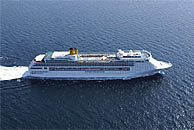 Fun, food, and Italian ambience are what the
Costa Cruises comprising of a fleet of mid- and mega-size
ships are all about. Even though it’s now owned by
Carnival Corporation, the line—with an illustrious history
stretching back almost 90 years to Genoa, Italy—has
managed to hold onto its heritage, and that’s what sets
this cruise line apart from so many others.
Fun, food, and Italian ambience are what the
Costa Cruises comprising of a fleet of mid- and mega-size
ships are all about. Even though it’s now owned by
Carnival Corporation, the line—with an illustrious history
stretching back almost 90 years to Genoa, Italy—has
managed to hold onto its heritage, and that’s what sets
this cruise line apart from so many others.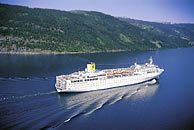 The Costa fleet is diverse, from gleaming
megaships to old, rebuilt liners from the 1960s. Of its
current fleet of ten, there are five megaships: the
1,928-passenger Costa Victoria, built in
1996; sister ships, the 2,114-passenger Costa
Atlantica, built in 2000, and the 2,114-passenger
Costa Mediterranea, built in 2003 and
biggest of the fleet, 2,718-passenger Costa
Fortuna as well as Costa Magica.
There is a pair of midsize 1,300-passenger ships, the
Costa Romantica (built in 1993) and the
Costa Classica (built in 1991). There is
also the 800-passenger Costa Allegra,
built in 1969 as a container ship and rebuilt as a cruise
ship in 1992. Carnival also moved two other ships over to
the Costa fleet in 2002. The 1,022-passenger Costa
Tropicale was built in 1981 and previously
operated as the Carnival Tropicale in the Caribbean. The
1,494-passenger Costa Europa was built in
1986, and was known previously as Holland America’s
Westerdam. All the ships summer in Europe.
The Costa fleet is diverse, from gleaming
megaships to old, rebuilt liners from the 1960s. Of its
current fleet of ten, there are five megaships: the
1,928-passenger Costa Victoria, built in
1996; sister ships, the 2,114-passenger Costa
Atlantica, built in 2000, and the 2,114-passenger
Costa Mediterranea, built in 2003 and
biggest of the fleet, 2,718-passenger Costa
Fortuna as well as Costa Magica.
There is a pair of midsize 1,300-passenger ships, the
Costa Romantica (built in 1993) and the
Costa Classica (built in 1991). There is
also the 800-passenger Costa Allegra,
built in 1969 as a container ship and rebuilt as a cruise
ship in 1992. Carnival also moved two other ships over to
the Costa fleet in 2002. The 1,022-passenger Costa
Tropicale was built in 1981 and previously
operated as the Carnival Tropicale in the Caribbean. The
1,494-passenger Costa Europa was built in
1986, and was known previously as Holland America’s
Westerdam. All the ships summer in Europe. Delicious
 Diigo
Diigo Fark
Fark Furl
Furl Google Bookmarks
 Spurl
Spurl Stumbleupon
 Yahoo My Web
 Technorati
 Reddit
 Digg
Digg